|
InternetChemistry - Current Chemistry News of the Week
|
 |
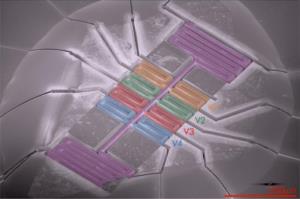
Elaborate nanostructures blossom from a chemical reaction perfected at Harvard.
Image: These false-color SEM images reveal microscopic flower structures created by manipulating a chemical gradient to control crystalline self-assembly.
[Credit: Wim L. Noorduin, Harvard University].
|
 |
Scientists uncover the fundamental property of astatine, the rarest atom on Earth.
Image: An international team of scientists, including a University of York researcher, has carried out ground-breaking experiments to investigate the atomic structure of astatine (Z=85), the rarest naturally occurring element on Earth.
The element is of significant interest as its decay properties make it an ideal short-range radiation source for targeted alpha therapy in cancer treatment.
|
 |
Life span of cloud-forming sulfate particles in the air is shorter than assumed due to a sulfur dioxide oxidation pathway which has been neglected in climate models so far.
Image: Measurement Station Schmücke. HCCT 2010 (Hill Cap Cloud Thuringia 2010) - A ground-based integrated study of chemical-aerosol-cloud interactions at the Schmücke Mountain in the Thuringian Forest in September/October 2010 [Credit: Dr. Stephan Mertes, TROPOS].
|
 |
How tiny gold particles aid the production of plastic components.
Image: At the interface between a gold particle and the titanium dioxide surface, an oxygen molecule is activated by a charge transfer and becomes catalytically active. Thus, methanol can be efficiently and selectively oxidized to formaldehyde; water is produced as well.
[Credit: M. Farnesi Camellone, D. Marx]
|
 |
The chemical memory of seawater: scientists examine the biomolecules dissolved in the ocean and read them like a history book of the sea.
Image: The subsequent analysis in the mass spectrometer generates a chemical fingerprint which indicates the origin of the organic substances.
[Credit: Yves Nowak, Alfred Wegener Institute].
|
 |
Made out of thin air - fixation of carbon dioxide through iridium catalyzed hydrosilylation.
Image: An air- and moisture-stable iridium(III) catalyst effectively promotes the hydrosilylation of carbon dioxide [Credit: Angewandte Chemie International Edition].
|
 |
Search for element 113 concluded at last - After many years of painstaking work, Japanese researchers prove third time's a charm.
Image: The observed decay chain of element 113 (Ununtrium). A chain of six consecutive alpha decays, produced in experiments at the RIKEN Radioisotope Beam Factory (RIBF), conclusively identifies the element through connections to well-known daughter nuclides.
[Credit: RIKEN]
|
 |
Inexpensive, super-sensitive device detects even low levels of toxic metals in water, fish.
Image: Commercial strip of glass covered with a film of 'hairy' nanoparticles, a kind of a 'nano-velcro,' that can be dipped into water to measure mercury levels.
[Credit: The Grzybowski Group, Northwestern University]
|
 |
Shine and Rise - Light-activated Reversal of Anesthesia. Azobenzene derivatives of propofol increase GABA-induced currents in the dark form and loose this property upon light exposure and thus function as photochromic potentiators. The coumpound can be employed as a light-dependent general anesthetic in translucent tadpoles.
|
 |
IU chemist develops new synthesis of most useful, yet expensive, antimalarial drug. Key to the success of the strategy was the development of mild, complexity-building reaction cascades that allowed the use of readily available, affordable cyclohexenone as the key starting material.
|
 |
Luminescent ink from eggs: C-dots can be made by plasma pyrolysis and used as printer ink.
Image: How do you like your eggs? Amphiphilic carbon dots (CDs) with intense blue fluorescence have been produced from chicken eggs by treatment with plasma. They are used as effective 'fluorescent carbon inks' for multicolor luminescent inkjet and silk-screen printing.
[Credit: Angewandte Chemie]
|
 |
Enzymes dig channels - enzymatic etching used to build nano- and microscale surface topologies. Image: [credit Angewandte Chemie]
|
 |
Northwestern University researchers have broken a world record by creating two new synthetic materials with the greatest amount of surface areas reported to date.
Image: Researchers have synthesized, characterized, and computationally simulated the behavior of two new metal-organic framework (MOF) materials displaying the highest experimental Brunauer-Emmett-Teller (BET) surface areas of any porous materials reported to date (7000 m2/g).
[Credit: JACS, ACS]
|
 |
Rice University researchers fine-tune time-resolved spectroscopy for the study of molecular-scale fluorescent targets.
Image: Researchers at Rice are working to optimize results from photoluminescent probes essential to the study of microscopic structures like cells, proteins and DNA.
The technique doubled the efficiency of a hairpin-shaped probe called a molecular beacon (at left) to find a specific DNA sequence by maximizing the amount of signal pulled from the background noise.
[Credit: Marti Group/Rice University]
|
 |
Forcing the molecular bond issue: New and improved model of molecular bonding from researchers at Berkeley Lab's molecular foundry.
Image: Under dynamic force spectroscopy, the bonds of a molecular system are subjected to controlled stretching until the bonds break.
The new model enables researchers to predict the 'binding
free energy' of a given molecular system, which is key to
predicting how that molecule will interact with other molecules.
[Image courtesy of Jim DeYoreo, Berkeley Lab].
|
 |
Heidelberg scientist shows that silver and gold materialised in different stellar explosions.
Image: The illustration is an artist’s impression of the first moments of an explosion before the star is completely torn apart.
[Source: European Southern Observatory/ESO]
|
 |
Max Planck Institute for Chemistry: Greenhouse gas is also released by fungi.
Image:
Methane producers in the underbrush - New research shows that fungi can also produce methane.
[Credit Katharina Lenhart]
|
 |
Caltech chemists identify the molecular mechanism by which such catalysts work.
Image:
Harry Gray's group at Caltech added a set of ligands to cobalt, slowing the reaction so that they could observe a key intermediate and then determine the chemical mechanism.
[Credit: Caltech/Marinescu et al.]
|
 |
Rapid response in cases of smoke poisoning by a two-step procedure to detect blood cyanide.
Image: A chemosensor added to the blood sample detects cyanides [Credit: UZH].
|
 |
Every atom counts in graphene formation - Rice University lab's nanoreactor theory could advance quality of material's growth.
Image: Rice University researchers have come up with a set of calculations to predict how graphene grows in the process known as chemical vapor deposition. The graph set against an illustration of graphene growing on a nickel catalyst shows the initial energy barrier a carbon atom must overcome to join the bloom; subsequent atoms face an ever-smaller energy barrier until the process begins again for the next line [Credit: Vasilii Artyukhov/Rice University].
|
 |
A new feedback mechanism operating between vegetation and cloud formation could enhance the climate change.
Image: The increase in carbon dioxide in the atmosphere causes an evaporation decrease of plants. As a result fewer cumulus clouds form, more sunlight reaches the ground - the climate change intensifies.
[Picture: Bart van Stratum]
|
 |
RUB-Biophysicists use surface-sensitive spectroscopy to analyse the interaction between proteins and pharmaceuticals.
Image: New Bochumer Combination Method - Infrared spectra provide information about structural changes in proteins.
To study proteins that are activated through ligand-binding, the Bochumer researchers anchored the molecules to a lipid bilayer (gray) via a His-Tag.
[Credit: Philipp Pinkerneil und J. Gueldenhaupt]
|
| |
More News (open access): |
That caffeine in your drink - is it really 'natural?'
|

|
|
That caffeine in your drink - is it
really 'natural?'
[Credit: iStock]
|
That caffeine in your tea, energy drink or other
beverage - is it really natural? Scientists are reporting
successful use for the first time of a simpler and faster
method for answering that question. Their report appears in
the American Chemical Society (ACS) journal Analytical
Chemistry.
Maik A. Jochmann, Ph.D., and colleagues point to the
growing consumer preference for foods and beverages that
contain only natural ingredients. Coffee, tea, colas, energy
drinks and other caffeine-containing drinks are the most
popular beverages in the world. Food regulatory agencies
require that caffeine be listed on package labels, but do
not require an indication of whether the caffeine is from
natural or synthetic sources. The scientists set out to
develop a faster, simpler method for categorizing caffeine’s
origins.
In the study, they describe use of a technique called
stable-isotope analysis to differentiate between natural and
synthetic caffeine. The test makes use of differences in the
kinds of carbon isotopes – slight variations of the same
element – found in caffeine made by plants and caffeine made
in labs with petroleum-derived molecular building blocks.
Their analysis, which takes as little as 15 minutes, found
four products that contained synthetic caffeine, despite a
“natural” label.
The authors acknowledge funding from the German Federal
Ministry of Economics and Technology and the German Research
Foundation.
Analytical Chemistry: "Caffeine
in Your Drink: Natural or Synthetic?". Anal. Chem.,
2012, 84 (6), pp 2805–2810; DOI: 10.1021/ac203197d.
Pig stomach mucins are effective as anti-viral agents
for consumer products
|

|
|
Mucin Biopolymers as Broad-Spectrum
Antiviral Agents
[Credit: iStock]
|
Scientists are reporting that the mucus lining
the stomachs of pigs could be a long-sought, abundant source
of “mucins” being considered for use as broad-spectrum
anti-viral agents to supplement baby formula and for use in
personal hygiene and other consumer products to protect
against a range of viral infections. Their study appears in
ACS’ journal Biomacromolecules.
In the report, Katharina Ribbeck and colleagues point out
that mucus, which coats the inside of the nose, mouth and
vagina, is the immune system’s first line of defense. The
slimy secretion traps disease-causing microbes, ranging from
influenza virus to HIV (which causes AIDS) before they can
cause infection. That has led to consideration of mucin, the
main component of mucus, for use as an anti-viral agent in a
variety of products. However, existing sources of mucins,
such as breast milk, cannot provide industrial-sized
quantities. Large amounts of mucus exist in the lining of
pigs’ stomachs, and the authors set out to determine if pig
mucus - already used as a component of artificial saliva to
treat patients with “dry mouth,” or xerostomia - has the
same anti-viral activity.
They found that pig mucus is effective at blocking a
range of viruses, from strains of influenza to the human
papilloma virus, which is associated with cervical and oral
cancer. They report that pig mucins could be added to
toothpastes, mouthwashes, wound ointments and genital
lubricants to protect against viral infections. “We envision
porcine gastric mucins to be promising antiviral components
for future biomedical applications,” the report says.
The authors acknowledge the National Institutes of Health
and the German Academic Exchange Service (DAAD).
Biomacromolecules: "Mucin
Biopolymers as Broad-Spectrum Antiviral Agents". 2012,
DOI 10.1021/bm3001292.
| |
Chemistry |
|
 |
Direction Selection: new method for template-directed DNA synthesis in the 3' and 5' directions.
Image: Controlled, stepwise chain extension was demonstrated both in the direction favored by nature (3'-extension) and in the direction typical for conventional DNA synthesizers (5') [Credit: Angewandte Chemie].
|
 |
Ames Laboratory scientists crack long-standing chemistry mystery.
Image: Scientists have long debated whether it was a hydroxyl (OH) radical or a form of iron known as the ferryl ion, [Fe(IV)O]2+, that functioned as the reaction intermediate for the Fenton reaction, with data to support both theories [Credit: Chemical Science.
[DOI 10.1039/C2SC20099F]
|
 |
Designing tiny molecules that glow in water to shed light on biological processes: University of Miami researchers are creating fluorescent molecules that can be turned on and off in aqueous environments to visualize activity within cells [Image credit: Francisco Raymo / University of Miami].
|
 |
First high electrocatalytic active ultrathin platinum nanowires with aspect ratio of at least 104 become a reality. [Image credit: Faming Gao; JACS]
|
 |
Continuous hydrogenation of carbon dioxide to pure formic acid in supercritical CO2.
Scheme: Pure formic acid can be obtained continuously by hydrogenation of carbon dioxide in a single processing unit.
[Credit: Angewandte Chemie]
|
| |
Physics |
|
 |
Results will help to pin down the 'Island of Stability'.
Image: Chart of nuclides in the region of the heaviest elements.
[Credit: Courtesy of Science/AAAS]
|
 |
New method knocks out stubborn electron problem: A newly published article in Physical Review Letters eliminates one of the top unsolved theoretical problems in chemical physics as ranked by the National Research Council in 1995.
Illustration of the two-electron model:
David Mazziotti, a professor in chemistry at the University of Chicago, has solved a longstanding problem in quantum theory: how to compute the energies and properties of any atom or molecule in terms of just two of its electrons.
[Credit: Kasra Naftchi-Ardebili]
|
 |
By electricity, researchers switch the magnetic state and electric resistance of a single molecule on and off - Blueprint for novel, compact storage media.
Image: Using a scanning tunneling microscope tip, defined electricity pulses were applied to the molecule, which switches between different magnetic states.
[Credit: CFN/KIT]
|
| |
Biochemistry / Chemistry and Biology |
|
 |
A German-Danish team is now presenting new findings about mustard oils in plant science in Nature - with interesting prospects for agriculture.
Image: When caterpillars or other
hungry insects feed on glucosinolate-containing plants like
broccoli, the glucosinolates get in contact with the enzyme
myrosinase, that releases mustard oils. These ward off the
insects.
[Picture: Dietmar Geiger].
|
 |
Research on the water oxidation reaction in plants and bacteria helps solve an important piece of the solar energy conversion puzzle; represents a major step toward a new generation of photovoltaics.
Image: Energy and Environmental Science - The structure and activation of substrate water molecules in the S2 state of photosystem II studied by hyperfine sublevel correlation spectroscopy [Credit: RPI].
|
| |
Chemistry and Medicine |
|
 |
An experiment has shown that strawberry extract added to skin cell cultures acts as a protector against ultraviolet radiation as well as increasing its viability and reducing damage to DNA.
Image: The reported experiment shows that strawberry extract added to skin cell cultures acts as a protector against UVA rays.
[Credit: SINC]
|
 |
There is an urgent need for better drugs to treat African sleeping sickness. Würzburg scientists have developed a very promising new agent, which is now to be further optimized.
Image: Chemical structure of the agent quinolone amide, which kills off the pathogens responsible for the African sleeping sickness [Credit: Georg Hiltensperger, Nicola Jones].
|
 |
German-American research team produces metal-peptide complexes.
Image: Via metal coordination, rhodium is bound between the two carbon rings.
[Credit: Florian Wieberneit, Raphael Stoll]
|
| |
Chemistry and Materials |
|
 |
Unraveling intricate interactions, 1 molecule at a time: In key step towards design of better organic electronic devices, Columbia engineering team makes first single-molecule measurement of Van Der Waals interactions at a metal-organic interface.
Image: This is a model structure illustrating the bonding of bipyridine to the rough gold surface through direct nitrogen-gold chemical bonding and indirect van der Waals bonding [Credit: Columbia Engineering].
|
 |
A network of porous carbon tubes that is three-dimensionally interwoven at nano and micro level - this is the lightest material in the world.
Image: An Aerographite in the making. It offers enormous potentials - e.g. for the production of batteries. Aerographite is water-repellent, jet-black (which is currently analysed) and electrically conductive.
[Credit: Kiel University]
|
| |
Chemistry and Nanotechnology |
|
 |
A new video protocol in Journal of Visualized Experiments focuses on the liquid phase synthesis of two nanocrystals that produce hydrogen gas or an electric charge when exposed to light.
Image: This is a schematic of the photocatalytic nanocrystal.
[Credit: Journal of Visualized Experiments]
|
 |
Genetic Code for Gold Nanoparticle Morphologies: DNA holds the genetic code for all sorts of biological molecules and traits. Image: University of Illinois chemists found that DNA can shape gold nanoparticle growth similarly to the way it shapes protein synthesis, with different letters of the genetic code directing triangular gold nanoprisms to grow into gold circles, stars and hexagons.
[Credit: Zidong Wang and Yi Lu]
|
 |
Ions, not particles, make silver toxic to bacteria. Rice University researchers report too small a dose may enhance microbes' immunity.
Image: Silver ions delivered by nanoparticles to bacteria promote lysis, the process by which cells break down and ultimately die, which makes silver nanoparticles a superior and widely used antibacterial agent.
[Credit: Zongming Xiu/Rice University]
|
 |
Vanadium pentoxide nanoparticles mimic natural enzymes and inhibit surface build-up of algae and bacteria.
Image: a) Biofouling at a boat hull;
b) knotted wrack, Ascophyllum nodosum; c) Mode of action of
bioinspired under water paints.
Like the natural enzyme vanadium bromoperoxidase vanadium pentoxid nanoparticles act as a catalyst for the formation of hypobromous acid from bromide ions (contained in sea water) and small amounts of hydrogen peroxide that are formed upon exposure to sun light.
[Source/Copyright: Tremel research group, JGU]
|
| |
Chemistry and Environment |
|
 |
How the N2O greenhouse gas is decomposed.
Image: The N2O-reductase enzyme possesses four reactive centers for the decomposition of nitrous oxide into elemental nitrogen.
[Source: BIOSS/ University of Freiburg]
|
|
New evidence for natural synthesis of silver nanoparticles.
|
 |
Worldwide sulfur emissions rose between 2000-2005, after decade of decline. Shipping, China top emissions growth in new analysis of 150 years of emissions.
Image: Manmade sulfur dioxide emissions by country show a decline by the historically large emitters - Europe and the US - but increases in growing economies up to 2005.
[Credit: Smith et al., Atmos Chem Phys 2011].
|
| |
Geochemistry |
|
 |
Potassium salts from fungi and plants initiate the formation of aerosol particles upon which moisture from the air condenses.
Image - Plant salts in clouds over rainforests: organic compounds condensate at potassium salts out of plants and fungi, so that aerosol particles form. They act as condensation seeds for fog and cloud droplets. How and why plants emit nonvolatile anorganic salts is as of yet unknown.
[Credit: C. Poehlker, MPI for Chemistry]
|
 |
Building blocks of life found around young star.
Image: This is the first time sugar been found in space around such a star, and the discovery shows that the building blocks of life are in the right place, at the right time, to be included in planets forming around the star.
The astronomers used the Atacama Large Millimeter/submillimeter Array (ALMA) to detect the molecules.
[Credit: ESO/L. Calçada & NASA/JPL-Caltech/WISE Team]
|
 |
How does Dolomite form?
Scientists in Kiel show the influence of marine bacteria on mineral formation. This picture shows the biofilm of a sulfate respiring bacteria species. Small white dots show Dolomite crystals.
Photo taken with a confocal laser microscope.
[Credit: ETH Zurich/Uni Zurich]
|
|
|